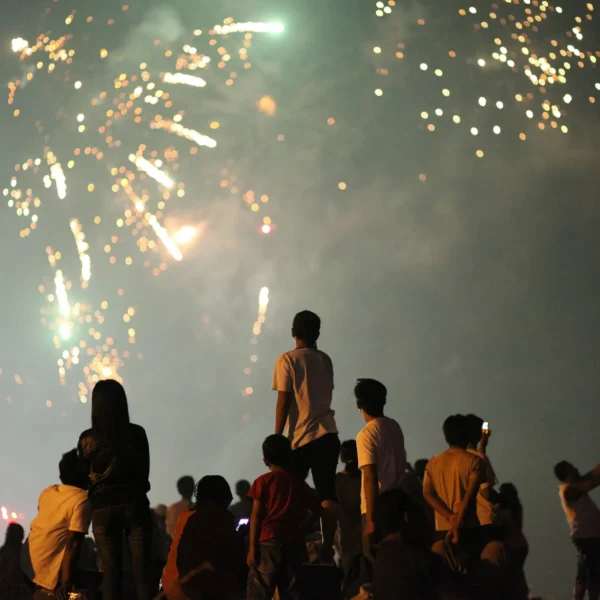
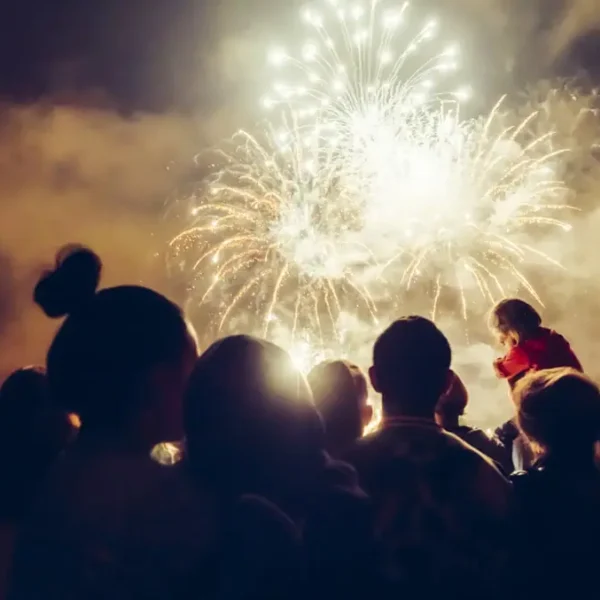
There’s nothing like the joy of watching a sky filled with colourful fireworks; the anticipation, bursts of colour and booming sounds make it a captivating sensory experience for all ages. But did you know that weather can change how fireworks look and perform?
Understanding how weather impacts fireworks is not just fascinating, it’s crucial for everyone’s safety. Weather conditions can enhance or diminish the quality of fireworks shows and even pose risks to the safety of pyrotechnicians and spectators.
This blog will examine how weather conditions—like wind, humidity, temperature, and rain—affect fireworks and discuss the best tips to keep you safe.
What are the types of weather conditions that can affect fireworks?
Wind
Wind plays a vital role in how fireworks displays unfold. When fireworks are launched, the wind can alter their trajectory. Strong wind gusts can push fireworks off course and change their height or direction, which is critical for synchronised fireworks displays with music.
Wind also poses safety concerns for private and public fireworks displays. String gusts can blow sparks and debris from fireworks towards spectators, potentially causing accidents. Additionally, in dry conditions, hot embers or debris from fireworks can ignite fires on dry grass or buildings.
To keep the fireworks display safe, organisers consider the wind speed and, if necessary, delay or postpone the display. They should also ensure that there are no flammable materials near the fireworks launch site.
Rain
Rain is another weather condition that can affect fireworks displays. Firstly, it raises safety concerns due to slippery conditions for spectators and organisers. Wet surfaces can destabilise firework launch equipment, leading to organisers postponing displays during heavy rain or thunderstorms to ensure everyone’s safety.
Rain also significantly affects the visibility of fireworks. Both heavy and light rain can obscure the view, making the display less impressive for spectators.
Additionally, rain can impact fireworks performance. Moisture can dampen the explosives, which can affect their brightness and colours. Rain can also disrupt fuses or ignition systems, potentially leading to misfires or delayed explosions.
For more information on fireworks in the rain check out this blog: Can fireworks go off in the rain?
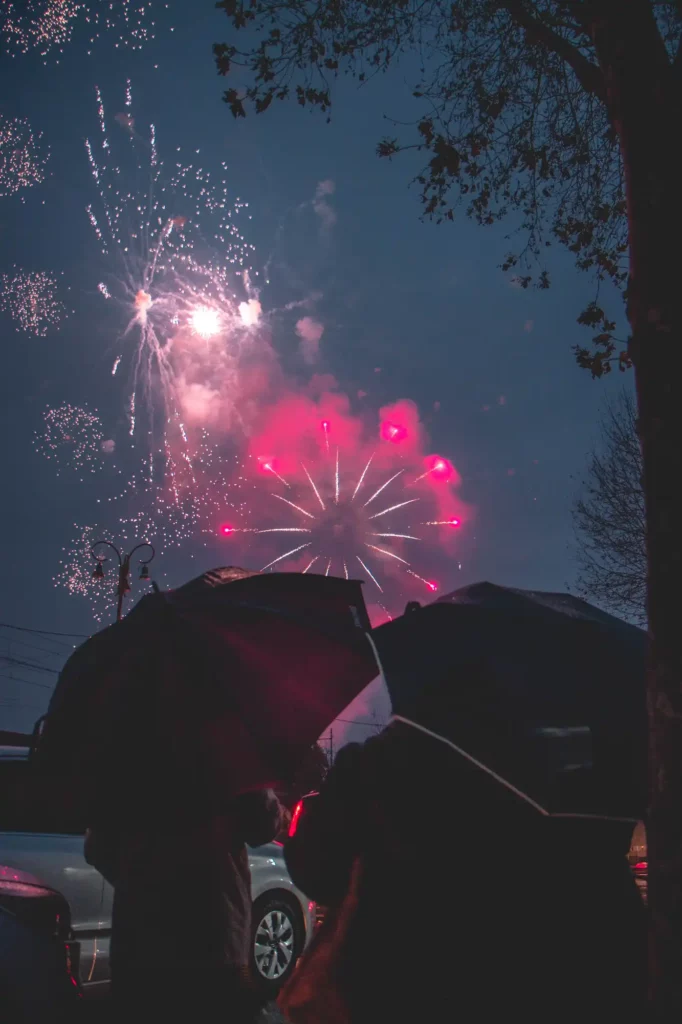
Humidity
Humidity, which is the amount of moisture or water vapour present in the air, can affect fireworks in several ways. Firstly, high humidity levels can impact the chemical composition of fireworks, meaning they might not explode as brightly. It can also make it harder for fuses to light properly, causing delays.
The colours produced by fireworks are also affected by humidity. The chemical reactions that create these colours can be altered in high humidity conditions, resulting in less vivid colours. This is because the moisture in the air can interfere with the chemical reactions, leading to a less intense colour display.
Additionally, storing fireworks in humid environments before use can cause them to absorb moisture. This may reduce their effectiveness and compromise their safety. Therefore, storing fireworks in dry locations is crucial to ensure they perform well and remain safe during displays.
Temperature
Temperature affects fireworks’ performance and appearance in various ways. It generally influences how brightly fireworks explode and the colours they produce in the sky.
When the temperature is high, fireworks will ignite faster, which can be an issue with the timing of synchronised fireworks displays. Additionally, high temperatures can increase the risk of fires if sparks ignite in dry surroundings.
On the other hand, cold temperatures can slow the burning of fireworks, resulting in less intense explosions. Freezing temperatures make fireworks less stable and affect how well launch equipment works.

What are the ideal weather conditions for fireworks?
The best weather for fireworks is clear skies and light wind. Clear skies ensure the fireworks can be seen clearly, while light wind helps keep the air clear of smoke.
Dry weather is ideal because rain can make fireworks less effective, and mild temperatures will ensure spectators are comfortable while also ensuring the fireworks perform well. Low humidity is also good because, as discussed, high humidity can affect how brightly the fireworks burn.
So, to conclude, the ideal weather conditions for fireworks would be clear skies, gentle breeze, dry conditions, moderate temperature and low humidity. This combination of weather factors ensures the best visibility, safety, and performance of the fireworks.

Safety measures to consider for enjoying fireworks in various weather conditions
When attending a fireworks display, rest assured that these general safety tips, regardless of the weather, are practical and easy to follow, ensuring your enjoyment and peace of mind.
- Maintain a safe distance: Always stay safe from the launch site. Follow any barriers or safety zones set up by organisers to protect spectators from debris or sparks.
- Wear appropriate clothing: Dress appropriately for the weather conditions. In colder weather, layer up to keep warm and wear light and breathable fabrics.
- Follow instructions: Pay attention to and follow all instructions provided by event organisers.
- Keep children supervised: If attending a fireworks display with children, ensure they are closely supervised.
Below, we will discuss our best tips for safely enjoying fireworks even in the weather conditions discussed in this blog.
Windy conditions:
Choose open areas without buildings or trees to minimise interference with wind. These will provide less obstruction for wind gusts and reduce the risk of fireworks veering off course.
Rainy conditions:
Efficient set-up is crucial to minimising exposure to rain. Make sure to set up quickly, and consider using tents to protect fireworks before igniting and spectators.
Humid conditions:
In humid conditions, store fireworks in a dry, ventilated space to prevent moisture from affecting the performance.
High/low temperatures:
Store fireworks in moderate temperatures to reduce the effects of hot or cold temperatures. Also, ensure you handle fireworks carefully to avoid damage from exposure to direct sunlight or freezing temperatures.
Understanding weather conditions’ effect on fireworks
To conclude this blog, we hope it has helped you understand how different weather conditions can affect fireworks displays. We’ve discussed how the struggles with wind, rain, high humidity, and extreme temperature can impact the effects of fireworks.
For everyone’s safety, follow the safety tips discussed and understand how to take the weather into account when planning to attend or create your own firework display.