If there is one thing that is almost as well-loved as football in the UK, it is undoubtedly fireworks. Fireworks of all shapes and sizes are a familiar sight at a range of special occasions and celebrations across the country. In fact, the British love fireworks so much that they spend more than £2 billion each year.
This year commemorates the 419th anniversary of the Guy Fawkes gunpowder plot in 1605, an event expected to draw participation from over 20 million people in celebrations.
Given the widespread popularity of fireworks, it is crucial to consistently observe stringent safety measures. These measures include not only safely setting off fireworks but also ensuring their secure storage. Here are some fundamental guidelines to help you safely store your fireworks until they are ready for use.
Why is proper storage for fireworks important?
Proper storage of fireworks is not just a matter of convenience; it’s crucial for ensuring safety during handling and use. Here’s why:
Preventing Accidental Ignition: Fireworks contain combustible materials and are meant to be ignited under controlled conditions. Improper storage near heat, flames, or electrical equipment increases the risk of accidental ignition. Even static electricity or friction can ignite fireworks if stored improperly.
Avoiding Moisture Damage: Fireworks are sensitive to moisture. Exposure to humidity or water can compromise their integrity, causing malfunctions or unpredictable ignition. This is particularly dangerous as it can lead to misfires or unexpected explosions.
Protecting Against Physical Damage: Proper storage protects fireworks from physical damage that could affect their performance. This includes impacts, crushing, or exposure to sharp objects that might puncture packaging and expose ignitable materials.

Choosing the right storage location
When it comes to storing fireworks safely, choosing the right location is paramount to prevent accidents and ensure their effectiveness.
Indoor Storage
Storing fireworks indoors offers significant advantages. It protects them from unpredictable weather conditions such as rain, snow, or high humidity, which can compromise their safety and performance. Optimal indoor locations are dry, cool areas away from sources of heat or flame, ensuring they remain stable and safe from accidental ignition.
Outdoor Storage
When indoor storage isn’t feasible, outdoor storage requires careful planning. Use waterproof containers to shield fireworks from rain and moisture, maintaining their integrity and preventing unexpected ignition. Secure these containers to prevent access and keep fireworks away from flammable materials like gasoline or propane tanks, minimising fire risks.
By choosing the right storage location—whether indoors or outdoors—and following these guidelines, you can ensure fireworks are stored safely, ready for a spectacular celebration while minimising safety risks.
Keep children away from Fireworks
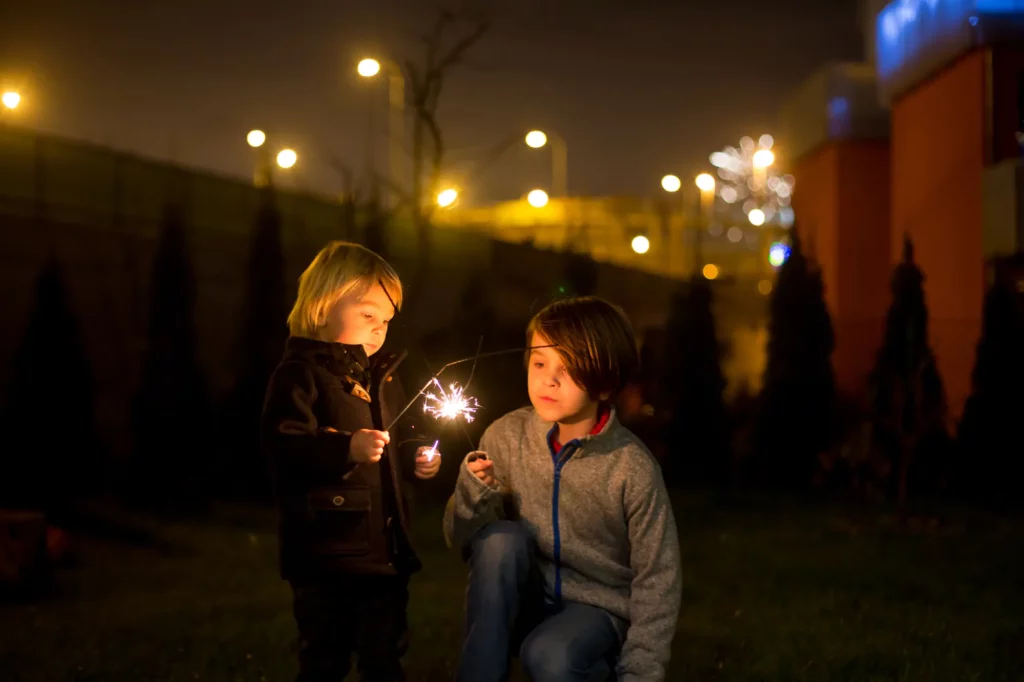
Fireworks are far from toys; even a standard sparkler can reach temperatures of up to 2,000°C, more than 20 times the boiling point of water.
The NHS reports that over 500 children under the age of 16 visit A&E every year during the four weeks around Bonfire Night, underscoring the critical need for safe storage and handling of fireworks.
Simply stashing your fireworks behind a cupboard or in a drawer won’t stop a curious child from discovering them and potentially causing serious harm to themselves and others.
Here are the essential guidelines we suggest:
- Supervision: Always keep a close eye on children near fireworks, including sparklers. Children should never handle or ignite fireworks themselves.
- Designated Area: Create a safe viewing area at a distance from where fireworks are launched. Ensure children stay far away from the area where fireworks are set off.
- Education: Educate children about the risks associated with fireworks and emphasise the importance of not touching any fireworks that appear defective or have not exploded.
Legal regulations for storing fireworks
For storage purposes, consumer fireworks are generally classified either Hazard Type 3 or Hazard Type 4 (usually equivalent to 1.3G or 1.4G or, if the fireworks are varied, they will all be classified as Hazard Type 3.
If you only purchase the regular selection boxes and sparklers from the grocery store or small quantities of other fireworks from a firework dealer a day or two before you use them you don’t generally have to apply for a special permit. If you do, however, plan on buying large amounts of powerful fireworks you will be subject to the national firework storage laws.